


Addendum: Magickcanoe has a photo of the coloration of the abdomen, and a better image of how the cat's body hairs are incorporated into the cocoon.

The idea of steganography is to hide messages within other information so that no one notices your communications. The word itself comes from a Latin-Greek combination meaning “covered writing”, from earlier physical methods that apparently included tattooing a message on a messenger’s head before letting him grow his hair back to hide it. In the case of digital steganography, it is all done in the math...The technique is explained in detail at the link, and is way over my head, but some of you may understand it.
Amazingly, it is possible to hide another, larger, full-color picture within this image and get it back again with about a dozen lines of Mathematica code. The key to the whole process is to use the least significant bit in each color channel of each pixel as a place to hide information...
In a sufficiently complex image, the human eye doesn’t see the loss of information. The fact that one color channel on a particular pixel might or might not be darker by 1/256 than before cannot be noticed…

The inclination in our culture is to look at the body as if it was constructed solely by means of compression. We tend to think of the skeleton as another version of the stone wall with the bones stacked one on top of the other, each relying on the ones below.

Fig 3 Given that we create so many structures using continuous compression, we imagine the body working in the same way: head and neck resting on the thoracic spine, upper body sitting on the pelvis, and the whole body resting on the feet. Myers, page 49
The reality, however, is that elimination of the soft tissues that tie bones together would result in the bones clattering into a pile at our feet.
In creating structure, the human body actually uses both tension and compression in a manner known as tensegrity. This is a term coined by architect Buckminster Fuller in 1929 when he combined the words “tension” and “integrity” to describe structures whose integrity rely on local, discontinuous compression members (for us, our bones) floating in a sea of continuous tension (our muscles and connective tissue). The bones push outward against soft tissues that pull in. Bones resist shortening and soft tissues resist expansion.
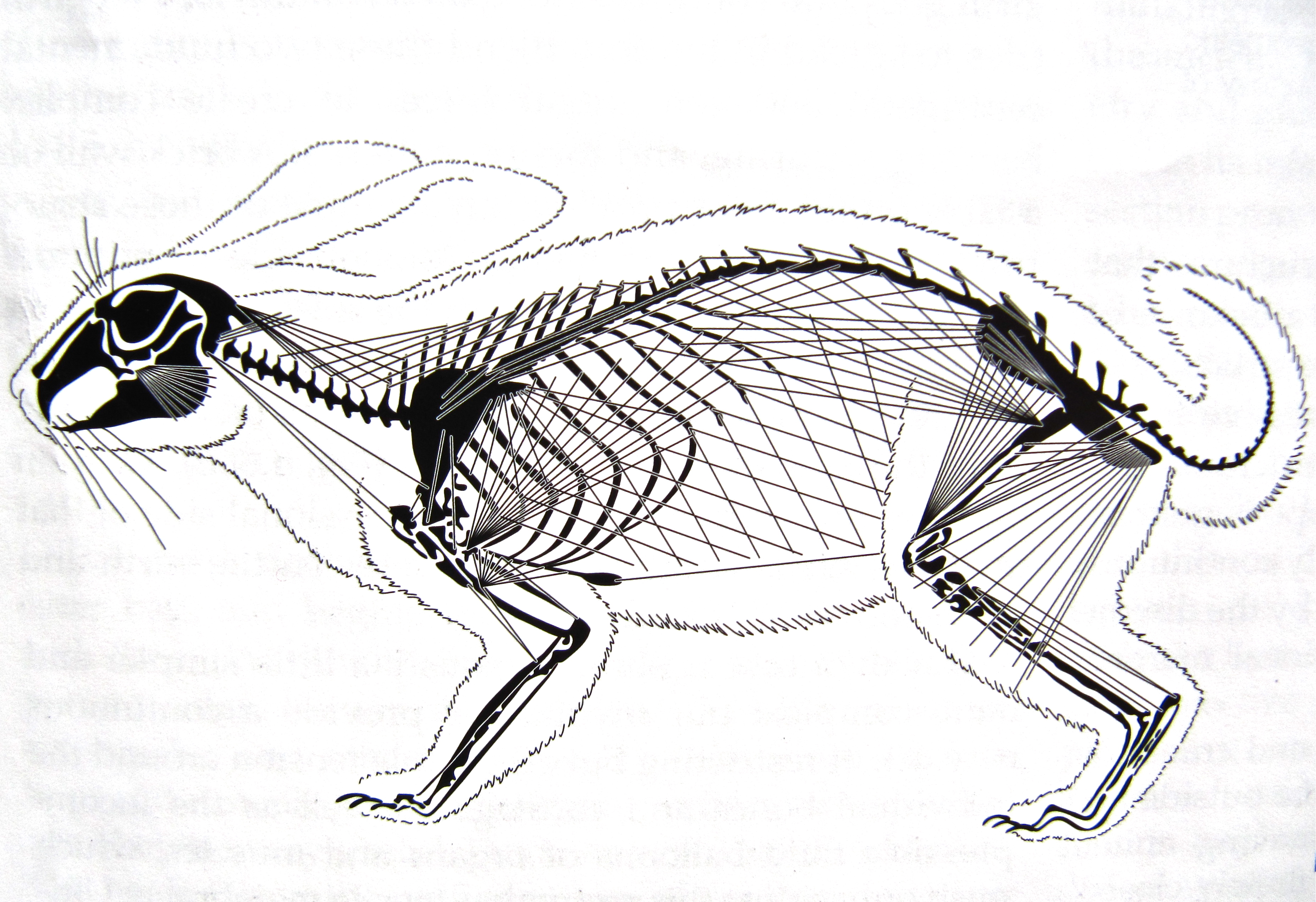
Fig 4 A tensegrity model. Straight lines trace out the rabbit's muscles and tendons as they run from their points of origin to their insertions. Myers, page 46
Take a look at Kenneth Snelson’s sculptures at www.kennethsnelson.net to get a better sense of how tensegrity works. Next time, I’ll describe how to build an icosahedron that gives you a wonderful feel for how the human body, along with many other living things, makes use of tensegrity.
The pup tent also illustrates tensegrity. Poles at either end, acting as compression elements, have no contact with one another and yet resist collapse. The guy wires and fabric of the tent are continuous and provide the tension that makes of the tent a coherent whole.
With tensegrity in mind, we can begin to appreciate how the thoracolumbar fascia creates structure through tension. As the fascia is lengthened or separated, its fibers resist further expansion. Tension builds within the fascial sheet, pulling on everything with which it connects – the bones of all four limbs, spine, pelvis and skull. As the guy wires of the tent tighten, scaffolding for the spine is created. Structure provided by soft tissues.
Now, let’s discuss thoracolumbar fascia as a source of power, as engine of the spine.
Remember that fascia is elastic. Once stretched, it wants to shorten or return to its resting length. Spread its fibers and we store elastic or recoil energy which can be used to create a bouncing back force. Simply by letting go of the intention to separate, we permit the body to make use of this stored energy to move back towards its original position.
This bouncing back force, then, is another major function of the thoracolumbar fascia and provides power to the spine.
Practicing one of two moves in the set – Step Up And Punch or Push Needle To Sea Bottom – will give you a body sense of this force. With each, the body bends forward towards the ground with one or both knees in a gently bent position. Note that it is the lumbar spine and hip joints that make the movement possible. These articulations move with what is known as lumbopelvic rhythm: a smooth, more or less simultaneous, 40 degree forward bend (flexion) of the lumbar spine and about 70 degree flexion of the hip (pelvis on femur).

Fig 5 Three ways of bending forward towards the floor. A, The normal strategy that involves near simultaneous 40 degrees of flexion of the lumbar spine and 70 degrees of hip (pelvis on femur) flexion. B, Here, hip flexion is limited by perhaps osteoarthritis or tight hamstrings so that more flexion is needed from the lumbar and lower thoracic spine. C, Reduced mobility of the low back from a tight thoracolumbar fascia or disc disease leads to greater demands for flexion at the hip joints. In B and C, the areas of red shading and the red arrows indicate where mobility has been lost. Neumann, page 353
With bending forward, the lumbar lordosis or forward curve of the low back is reversed and the thoracolumbar fascia is drawn taut.
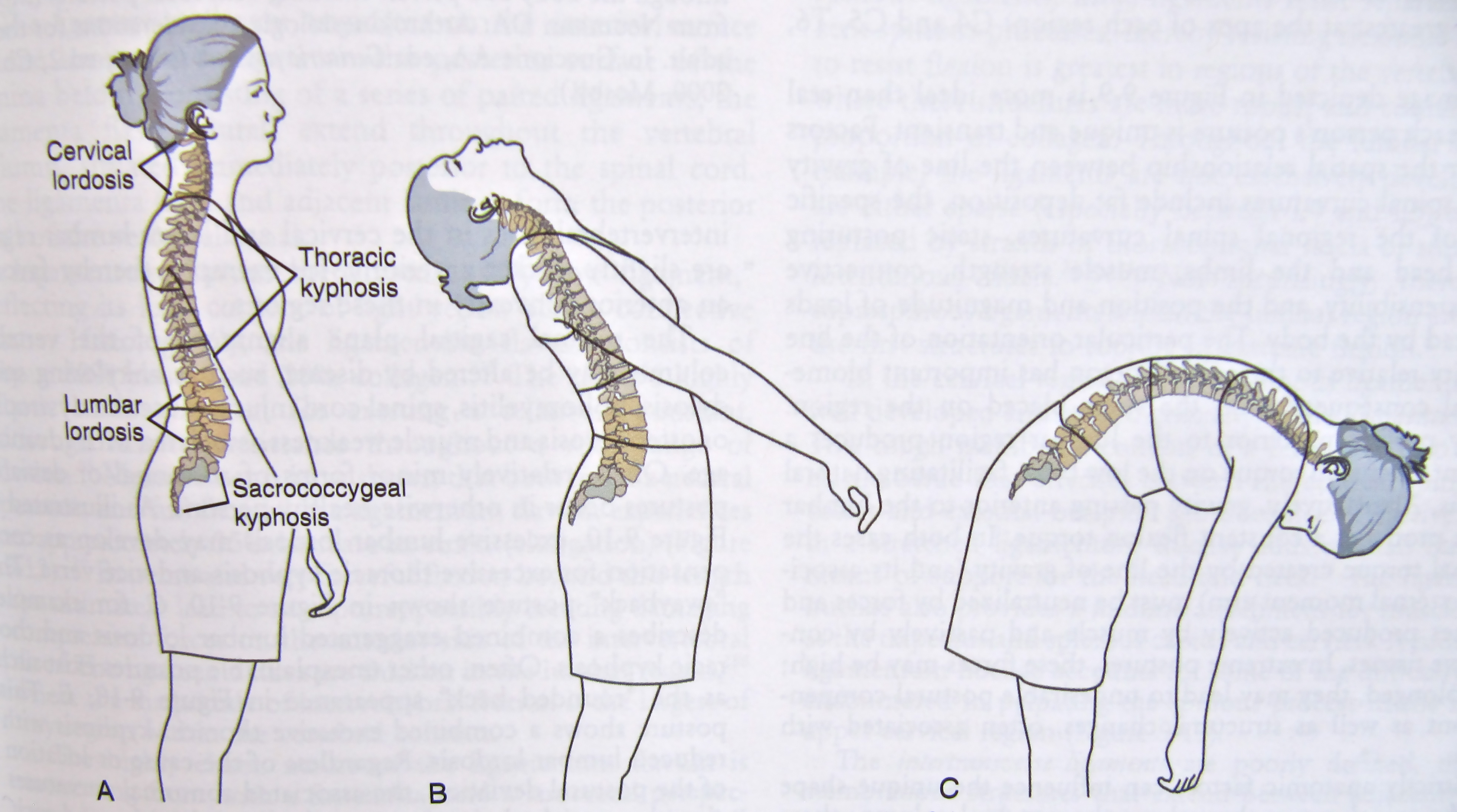
Fig 6 Bending alters the curves of the back and the thoracolumbar fascia. A, The normal curves seen with an upright stance. B, Backward bending, or extension, increases the lumbar and cervical kyphosis (forward curve), straightens the thoracic kyphosis (backward curve) and shortens the thoracolumbar fascia. C, Forward bending, or flexion, removes the normal lordosis of the low back and neck, exaggerates the thoracic kyphosis and lengthens the thoracolumbar fascia. Neumann, page 313.
The capacity of the thoracolumbar fascia for elastic recoil can then be used to return the body to an upright posture. And because this sheet of fascia lies almost outside the body, it pulls upward on the trunk with the efficiency of a long lever.
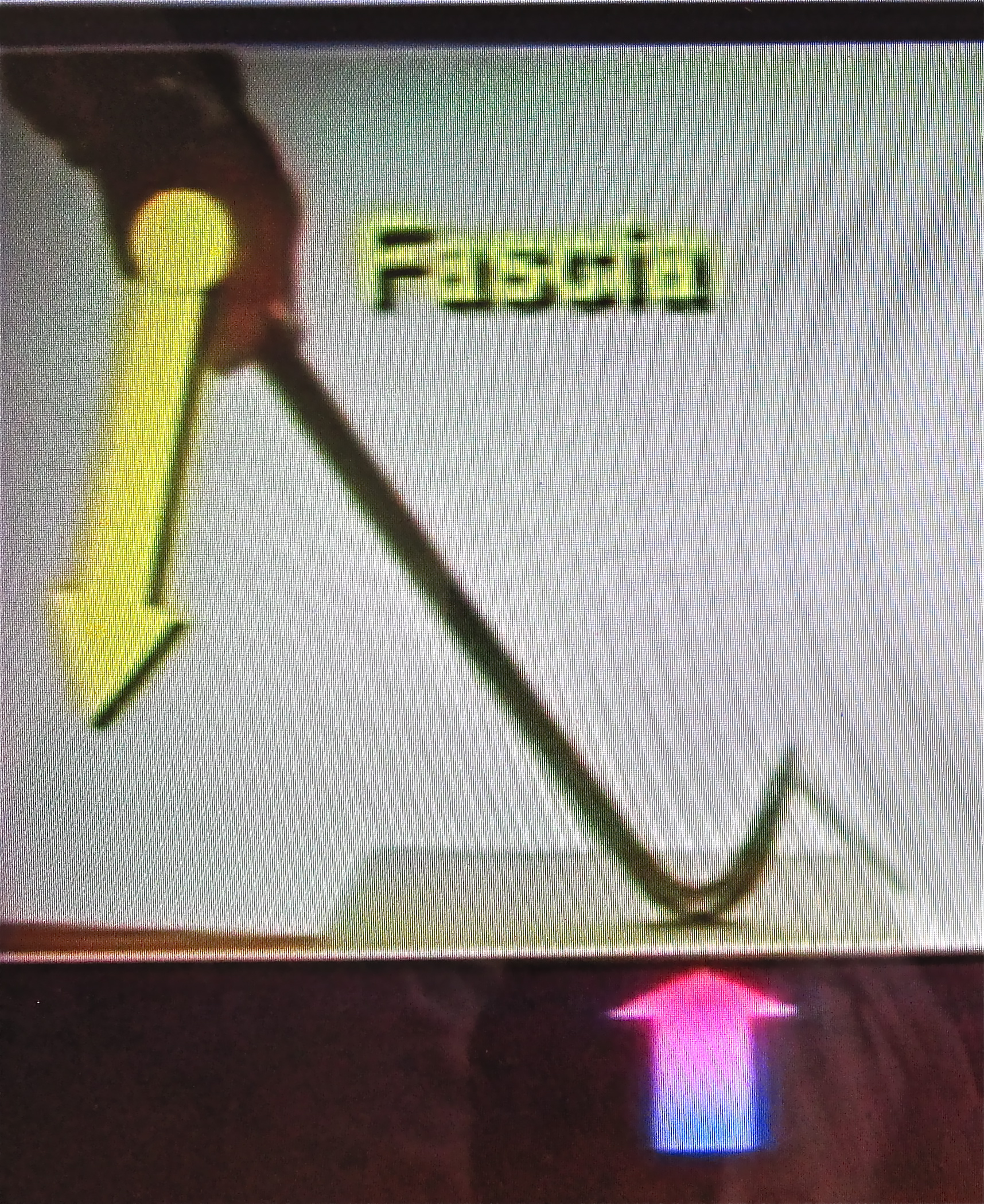
Fig 7 Because the thoracolumbar fascia lies just under the skin and some distance from the back, the elastic recoil energy it develops during forward bending can then be used with great efficiency to pull the body back up. Gracovetsky, 2007
Now, forward bending is not the only way we are able to stretch out the thoracolumbar fascia. The descent phase of the don yu is another opportunity for engagement of this fascial spring.
The next image shows the head of the thigh bone (the femur) dropping along the arc of the green arrow as we descend in the don yu. The proximal end of the femur, the part that meets with the pelvis, is free to move while its distal end forms a joint with the knee and is more or less fixed.
The pelvis, attached to the hip, of course falls as well. As they both descend, there is a natural, gentle backward tilting of the pelvis, and the thoracolumbar fascia, melded to the sacrum, and all its extensions are elongated from below.
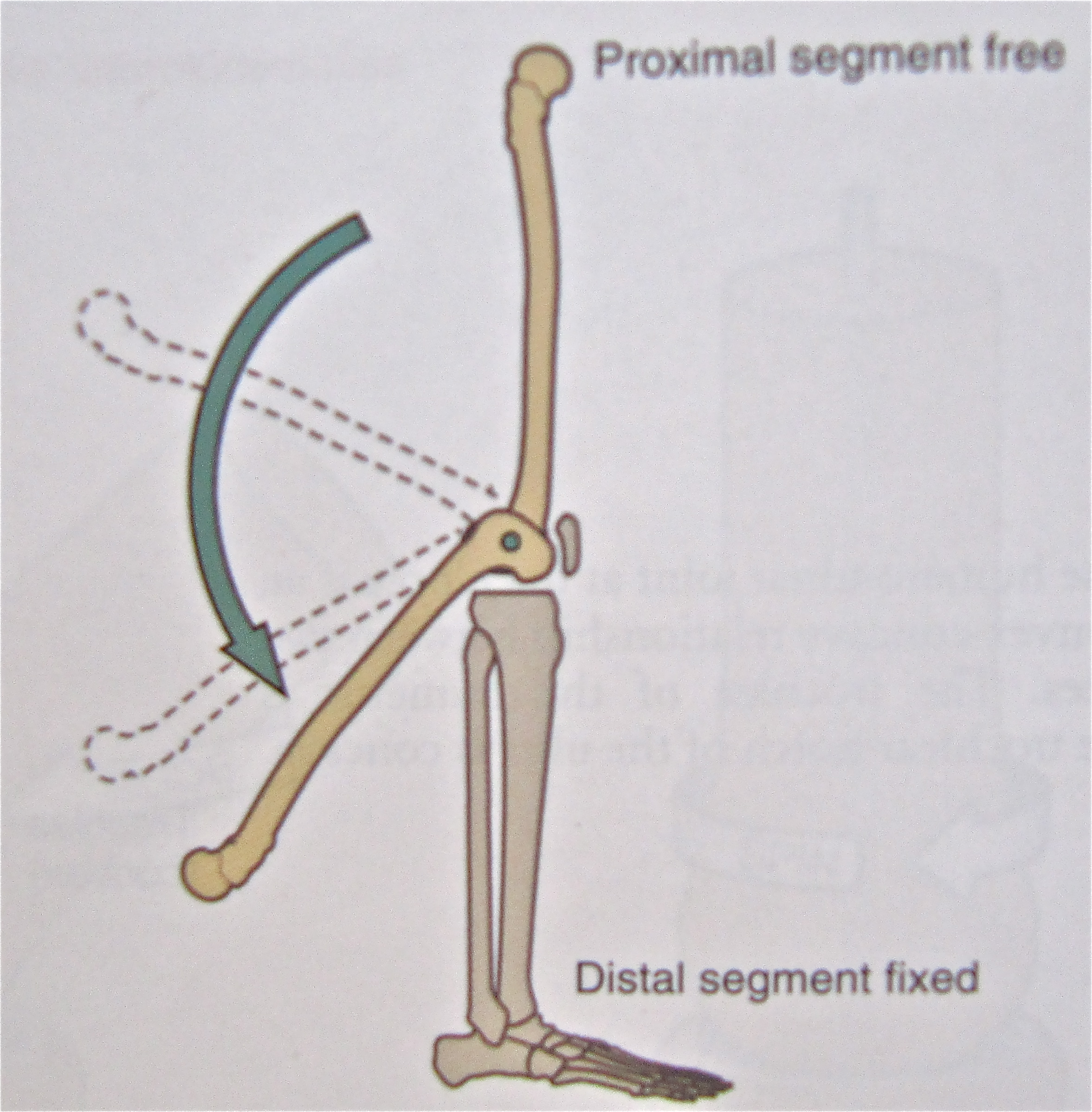
Fig 8 In the don yu, it is the joints at the hip, knee and ankle that permit the fall of the pelvis and creation of the bouncing back force. Neumann, page 7
Allowing gravity to lower the pelvis stores elastic energy even though little work is performed. Acceding to gravity on the way down generates energy that can be used to overcome gravity on the way up. Perpetual motion. A neat phenomenon involving a hidden force that develops not only with the don yu but also at the front and back ends of the tor yu. Indeed, every time we settle our weight in the set.
So, thoracolumbar fascia, a source of structure and power whenever we bend forward or settle our weight.
MacFarlane blogs for the Taoist Tai Chi Society, here: http://ittcs.wordpress.com


